
If you are thinking about buying an AI video ad, read this before you send anyone a deposit. I produce AI video commercials for a living through my company Ailygence, and I will tell you plainly: AI video is the best value in advertising I have seen in my career, and it is also the product most surrounded by nonsense. This is the guide I wish every client read before our first call: what AI video ads actually are, where they shine, where they still break, what fair pricing looks like, and the questions that separate a serious vendor from someone with a subscription and a prayer.
What an AI video ad actually is (and how one gets made)
An AI video ad is a commercial where most of the visuals are generated by AI models instead of filmed with a camera. There are three main flavors. Text-to-video turns a written prompt into moving footage. Image-to-video animates a still image, often your own product photo, which tends to give more controllable results. And AI avatar video puts a synthetic presenter on screen to deliver your script, the format companies like HeyGen and Synthesia built their businesses on.
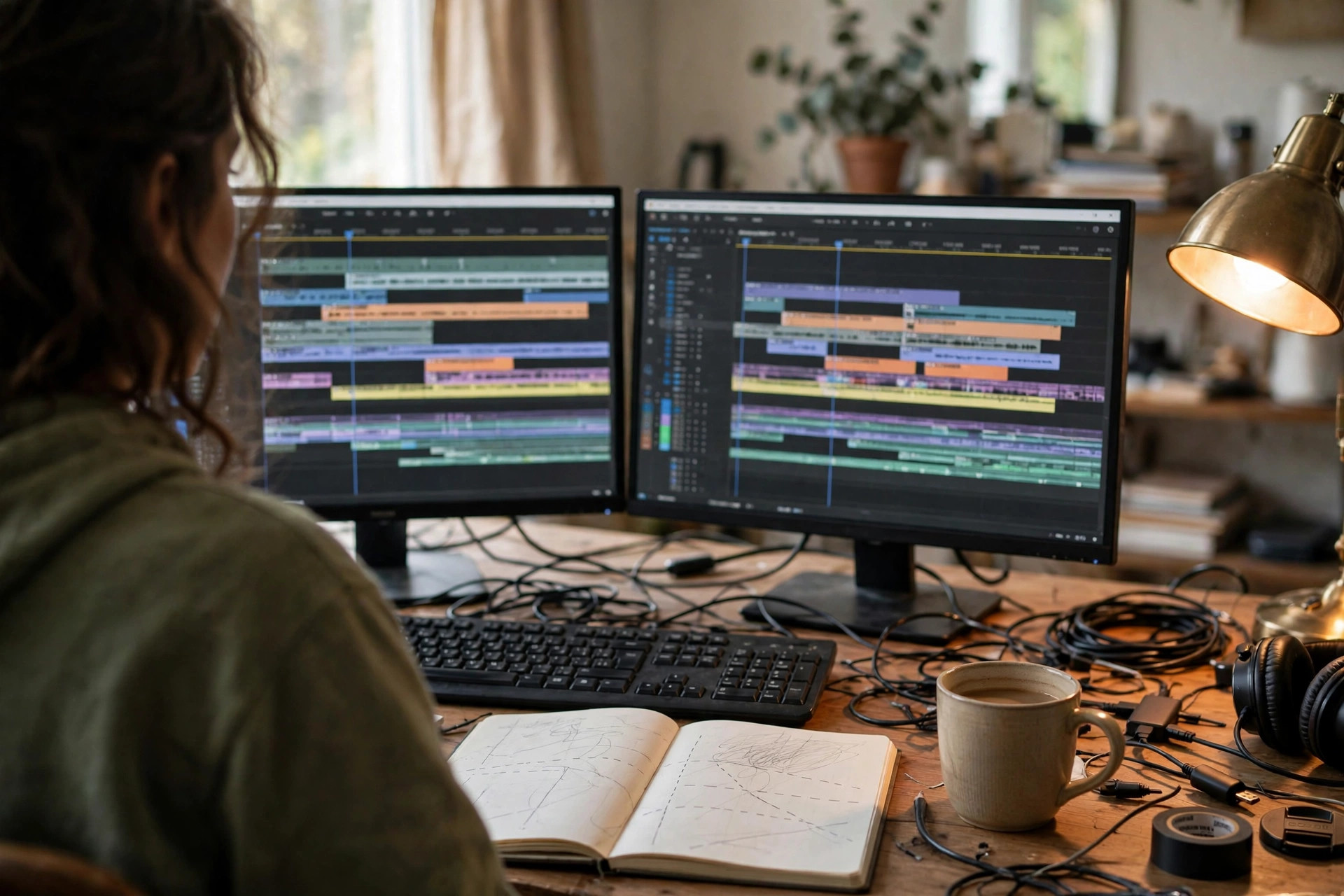
Here is the part most sellers skip: nobody presses a button and gets a finished ad. The real workflow is script, reference images, generation, culling, editing, voice, music, and captions. Generation is the messy middle. When filmmaker PJ Accetturo made the famous fully AI-generated Kalshi spot for the NBA Finals, it took 300 to 400 generations to get 15 usable clips, roughly a 4 to 5% keeper rate, according to eWeek’s June 2025 reporting. That is not a flaw in his process. That is the process. Anyone who tells you AI video means instant, effortless ads has either never made one or is hoping you never find out.
The raw material also comes in short bursts: most models natively generate clips of about 5 to 15 seconds, and longer generations develop distortions and confused motion, as summarized in a Medium piece reviewing 2024 to 2026 deepfake research. A 30-second ad is therefore a quilt of short clips stitched together by a human editor, and the stitching is where professionals earn their fee.
What AI video does brilliantly on a small budget
Let me start with the good news, because it is genuinely good. For a small business, AI video collapses the two biggest barriers in advertising: production cost and production logistics.
The Kalshi spot is the clearest illustration: 30 seconds, made with Google’s Veo 3 plus standard editing tools, for $2,000 in two days. Traditional quotes were seven figures, so the AI route cost about 95% less, and the ad aired during Game 3 of the NBA Finals to more than 20 million impressions, per news.designrush.com. Your bakery or clinic does not need the NBA Finals, but the economics scale down: what once required a crew, a location, and a shooting schedule can now be produced on a laptop.
The performance question is the one buyers ask me most. In January 2026, researchers from Columbia, Harvard, TU Munich, and Carnegie Mellon published a field study with Taboola covering 300,000+ live ads, reported by ETBrandEquity. Raw click-through was 0.76% for AI-generated ads vs 0.65% for human-made; after controlling for placement and audience, the two were roughly even. Two details matter. First, AI ads that did not look like AI achieved the highest engagement of all groups. Second, human faces were the key trust cue. One honest caveat: this study covered image-based native and display creative, not AI video specifically. It is the strongest independent field evidence available, but it is not video versus video.
A second data point: ad-tech vendor VDO.AI’s July 2026 study of about 200 campaigns, reported by mediabrief.com, found connected TV completion rates of 92% for AI creative vs 90% for non-AI, and online video 71% vs 70%. It is the vendor’s own campaign data, so treat it as indicative rather than independent, but it points the same direction.
Where AI video genuinely pulls ahead of traditional production is iteration. Testing five or ten creative variations used to mean five or ten shoots, or at least five or ten editing sessions on expensive footage. With AI, generating variant hooks, scenes, and endings is cheap, which makes creative testing affordable for businesses that could never afford it before. That is the quiet superpower: not that one AI ad beats one filmed ad, but that you can afford to find out which of twelve AI ads works best.
Where AI video still falls short (the honest part)
Now the part most AI video sellers will never put in their own marketing. I am putting it here because you will discover it anyway, and I would rather you discover it before you pay.
Character consistency is the primary unsolved problem. Getting the same person to look identical across multiple clips is difficult for most models; faces shift subtly between generations, according to a 2026 Medium guide on AI video formats. Reference-image workflows, like Veo’s ingredients or Runway’s references, anchor a subject far better than text prompts, but as filmdaily.co reported in September 2026, they do not guarantee an identical face in every frame. If your ad concept needs a recognizable spokesperson appearing in scene after scene, AI video will fight you.
Then the artifacts: flickering hands, distorted faces, unrealistic walking, morphing objects, unstable backgrounds, even rogue subtitles, all documented across current tools per techtimes.com’s March 2026 roundup. The deepfake research review estimates around one in five clips needs human correction for bad movement or strange transitions. A serious vendor budgets time for this. A cheap one ships the artifacts and hopes you do not notice on a phone screen.
Audio is a separate headache on many platforms. Luma’s Ray3.2 model does not generate native audio at all, and voice cloning is usually an upsell (see the add-on pricing in the table above). If a quote assumes voiceover is free and automatic, ask where the voice is coming from.
Two cost traps deserve attention. First, failed generations still consume credits with no refund on most platforms; one Kling review on tutorialsbynitin.com cites 30 to 40% failure rates during peak hours. Second, free tiers are not a bargain for commercial work; they are a licensing violation. Pika’s free tier is 480p with a watermark, Luma’s free tier carries no commercial rights, and Runway’s free tier is a one-time credit allotment. If a vendor’s price seems impossibly low, ask which paid tier they generate on.

What fair pricing looks like
Prices for AI video work span a wide range, and most of it is legitimate: it reflects different levels of strategy, labor, and polish. Here is the market, grounded in published pricing:
| Tier | Typical price range | What you usually get |
|---|---|---|
| Marketplace gig | $25 to $150 starting | Simple short asset from a freelancer listing; most video ad gigs on guru.com cluster at $25 to $100 starting prices (listings crawled September 2026) |
| Practitioner packages | $50 to $300 | Basic 15-second social video ($50 to $80), standard 30-second ad ($100 to $150), premium 60-second with consultation ($200 to $300), per one practitioner’s published 2026 packages; monthly retainers from $200 to $1,000 for 2 to 8 videos |
| Mid-market professional | $150 to $550 per commercial | Strategy, script, generation, editing, revisions, and licensing handled for you; this is where my own published pricing sits (AI Video Commercials $150/$300/$550 and AI Ad Creatives $50/$120/$250 on sagarsamy.com/pricing) |
| AI studio | $2,500 to $3,500 | Polished 15 to 60 second hero spot; broadcast-level AI commercials run far higher, per Versely via ruminatex.com, October 2026 |
| Traditional production (for comparison) | $500 to $50,000+ | Freelancers $500 to $3,000 per minute, studios $3,000 to $10,000 per minute, full-service agencies $10,000 to $50,000+, per vidico.com’s 2026 guides |
What drives cost within those ranges is rarely the tool subscription. The tiers a working professional actually uses run roughly $10 to $35 per month per seat, and one practitioner blog puts the working cost stack at $125 to $265 per month in subscriptions plus 5 to 8 hours of labor per video. That math is the honest core of every fair quote: tools plus real human hours plus revision cycles. For reference, here are the working tiers behind those numbers:
| Tool | Working tier | Price |
|---|---|---|
| Runway | Standard | $15/mo |
| Kling | Standard | $10/mo |
| HeyGen | Creator | $29/mo |
| Synthesia | Starter | $29/mo |
| Pika | Pro | $35/mo |
| HeyGen voice cloning | Add-on | $99/yr |
So when you compare quotes, compare what the hours buy. A $50 gig and a $300 commercial can both be fair; they are simply different products. The $50 version is likely one concept, minimal revisions, and stock music. The $300 version should include a proper script, multiple generated variants to choose from, human editing and cleanup, licensed audio, and at least one or two revision rounds. Know which one you are being offered before deciding the cheaper quote is the better deal.
One more pricing note: beware the tool-locked vendor. In September 2026, OpenAI removed the entire Sora video API with no replacement, killing creator pipelines built on it within a year, as reported by tech-insider.org and versely.studio. A vendor whose offering depends on a single model is selling fragility. Craft transfers between tools; a subscription does not.
Red flags in a vendor
After a few years in this work, I can spot a risky AI video seller within one conversation. Watch for these warning signs:
- “AI does everything, no human work needed.” We have already established that a professional spot took 300 to 400 generations for 15 clips. A vendor who denies the labor is either outsourcing the culling to you (in the form of a bad ad) or about to surprise you with revision fees.
- No revision policy in writing. AI generation is probabilistic. If the first draft is not right, and it often is not, you need to know how many revision rounds are included and what extra rounds cost.
- Impossibly low prices with no explanation of the tier. If someone charges $25 for a commercial and cannot tell you which paid tool tier they generate on, assume free tiers, which means watermarked or non-commercial output, or assume your ad is one of fifty being rushed through the same afternoon.
- Offering AI-generated customer testimonials. This is not just unethical, it is treated as inherently deceptive under FTC guidance even with disclosure, according to a 2026 legal roundup on thestacc.com. A vendor who offers fake reviews will cut other corners too.
- No plan for AI disclosure. Meta applies “AI Info” labels (formerly “Made with AI”), TikTok and YouTube mandate AI content disclosure, the EU’s AI Act requires deepfake labeling from August 2026, and New York’s synthetic-performer law took effect in June 2026 with penalties of $1,000 for a first violation and $5,000 after. A vendor who has never heard of any of this is not ready to publish ads on your behalf.
- One-model dependence. The Sora shutdown is the cautionary tale. Ask what happens to your project if their favorite model changes pricing, degrades, or disappears mid-project.
Questions to ask before you pay
Bring this list to any sales call, including one with me. A serious vendor will answer all of them without flinching.
- Which tools and models will you use for my ad, and are they paid tiers with commercial licenses?
- Who writes the script, and do I approve it before any generation starts?
- How many revision rounds are included, and what does an extra round cost?
- How do you handle character and face consistency across scenes?
- Where does the voiceover come from, and is the voice licensed for commercial advertising?
- Is the music licensed, and for which platforms and territories?
- Who owns the final files, and do I also receive the project files?
- How will the ad be labeled as AI-generated on each platform where it runs?
- What is the realistic turnaround, and what is explicitly not included in the quote?
- If the model you use shuts down or changes mid-project, what is your backup plan?
Notice what this list does: it moves the conversation from the tool to the craft. You are buying judgment about what will persuade your customer, and the labor to execute it.
Who should buy AI video ads, and who should wait
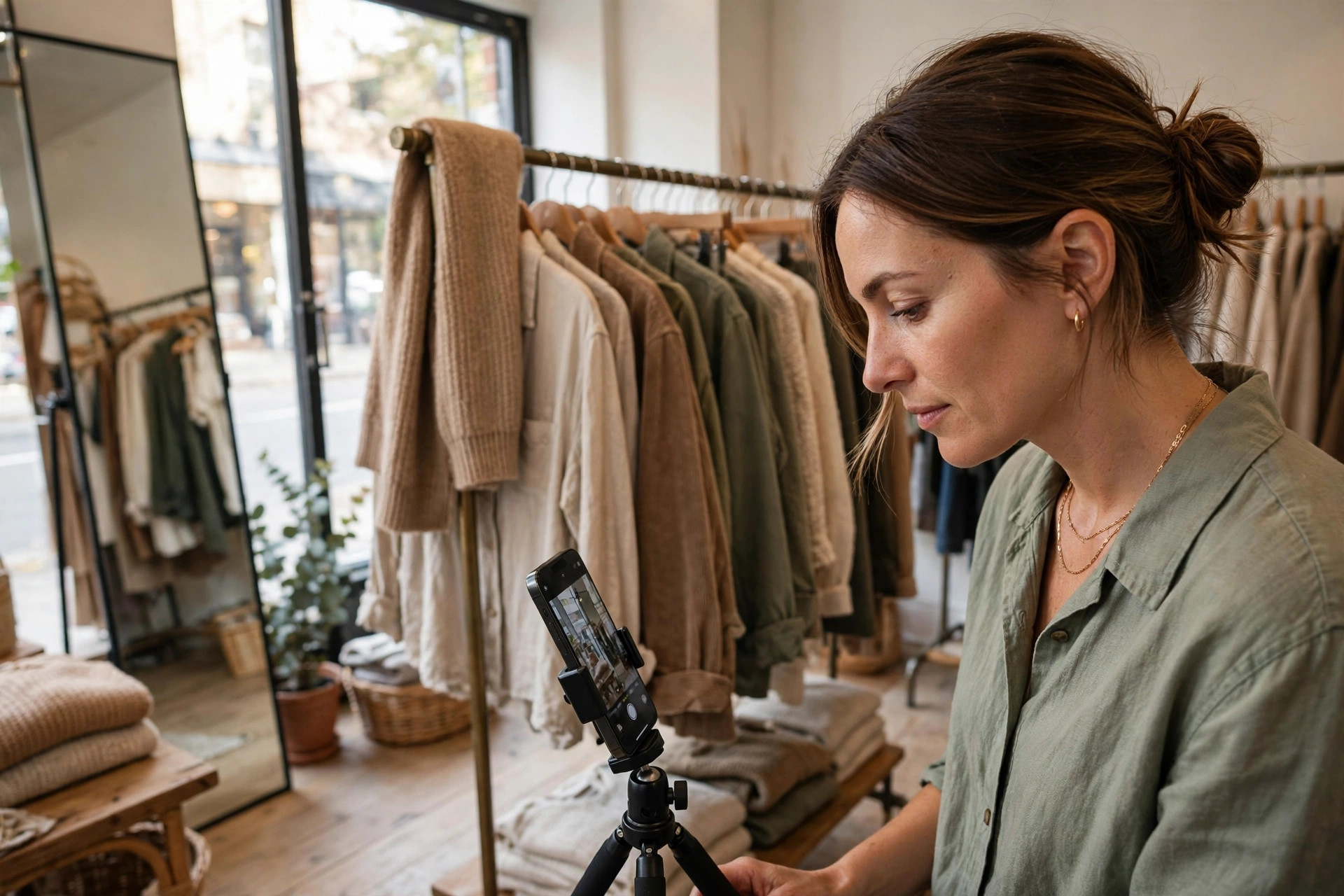
AI video is an excellent buy if you sell a product that benefits from demonstration, run a local service business that needs a steady flow of social content, want to test multiple ad angles cheaply, or simply cannot justify a traditional shoot. E-commerce sellers, restaurants, clinics, real estate agents, and coaches tend to get the most per dollar, because their ads are about the offer more than the cinematography.
You should wait, or spend differently, in a few cases. If your brand needs a recognizable recurring spokesperson across a long campaign, current consistency limitations will frustrate you; hire a human face or budget for heavy cleanup. In luxury or high-trust categories where polish is itself the message, the savings may cost you positioning. And if anyone pitches synthetic customer testimonials, walk away: under FTC guidance, fake AI testimonials are considered deceptive even when disclosed, with a maximum 2026 civil penalty of $53,088 per violation according to thestacc.com’s legal roundup. No ad is worth that risk. (I am not a lawyer; treat the legal notes here as a prompt to get proper advice, not as advice itself.)
One trend worth watching: Meta has been moving toward fully automated ad creation, where a brand submits a product image and budget and AI handles creative and targeting end to end, per The Wall Street Journal’s June 2025 reporting via YourStory. Platform-native AI creative is coming regardless, which is another reason to buy craft and strategy rather than marrying any single tool.
The same shift is happening on the platform side. OpenAI has started testing visual ad placements inside ChatGPT’s image generator: labeled ads kept separate from the image you are generating, with no influence on the answers, and DoubleVerify and Integral Ad Science piloting independent evaluation of its brand-safety safeguards, per OpenAI’s announcement reported by Unite.AI in October 2026. The takeaway for buyers stays the same: the creative tool and the ad platform are converging, so ask any vendor how results get measured on each placement, buy craft and strategy, and never marry a single tool.
Want an AI video ad made properly?
I produce AI video commercials and ad creatives for small businesses through Ailygence, with published pricing from $50 to $550. See the full pricing breakdown, then send me your brief.
Start Your ProjectPrefer to compare first? See /pricing/ for every tier.
Frequently Asked Questions
How much does an AI video ad cost for a small business?
Marketplace gigs start around $25 to $150, practitioner packages typically run $50 to $300 depending on length and revisions, mid-market professional production with strategy and revision rounds runs $150 to $550, and AI studios charge $2,500 to $3,500 for a polished 15 to 60 second hero spot. Traditional filmed production starts far higher, at $500 to $3,000 per minute from freelancers per 2026 industry guides.
Can AI video ads really perform as well as traditionally filmed ads?
The early evidence says yes, with a caveat. A January 2026 field study by researchers from Columbia, Harvard, TU Munich, and Carnegie Mellon with Taboola, covering 300,000+ live ads, found AI-generated ads performed roughly even with human-made ads on click-through and conversions after controls, and AI ads that did not look artificial performed best of all. The study covered image-based native ad creative rather than video specifically, so treat it as strong directional evidence, not a final verdict on video.
Do I have to disclose that my ad was made with AI?
In most cases, yes. Meta applies “AI Info” labels (formerly “Made with AI”), TikTok and YouTube require AI content disclosure, the EU AI Act requires deepfake labeling from August 2026, and New York law requires conspicuous disclosure of synthetic performers with penalties of $1,000 for a first violation and $5,000 for subsequent ones. Under FTC guidance, synthetic spokespersons presented as real humans need clear disclosure, and fake AI-generated testimonials are considered deceptive even with disclosure.
How long does it take to make an AI video ad?
A straightforward 15 to 30 second AI video ad typically takes a few days to two weeks including script approval, generation, culling, editing, and revision rounds. Generation itself is fast; the time goes into producing dozens or hundreds of clips to find the usable ones, then human editing, voice, music, and cleanup. Anyone promising a polished custom ad in a few hours is skipping steps.
What is the biggest risk when buying AI video ads?
The biggest practical risk is inconsistency: faces and characters shifting between scenes, plus artifacts like distorted hands or morphing objects that a cheap vendor ships without fixing. The biggest business risks are licensing (free tool tiers used for commercial work) and legal (undisclosed synthetic spokespeople or fake AI testimonials). Both are avoidable by asking the right questions before you pay.
Can AI video create a consistent spokesperson for my brand?
Not reliably yet. Character consistency across multiple clips remains the primary unsolved problem in AI video: faces shift subtly between generations, and reference-image workflows reduce but do not eliminate the drift. For a single ad with one presenter it is manageable; for a recurring brand character across a long campaign, you are better off with a human spokesperson or budgeting significant manual cleanup.