


Quick answer: You become a writer the same way you become good at anything unglamorous: by writing on schedule, for real readers, about things you actually know. I am not a bestselling novelist, and this is not an article about novels. I write every working day for a living: captions, campaigns, scripts, emails, and articles like this one. Here is what that daily practice taught me, and the exact system I would follow if I were starting over today.
I have been on both sides of the blank page for years now. The side where writing is a fun idea you think about, and the side where Tuesday needs a post whether you feel inspired or not. Everything useful I know about writing came from the second side. This is the guide I wish someone had handed me back when I was still on the first.
Nobody hires a writer. They hire a reader’s best friend.
Most people who want to be writers start with what they want to say. Working writers start with who is reading. The difference sounds small. It changes everything.
When I write captions for a restaurant’s Instagram, I am writing for a tourist deciding where to eat tonight, scrolling fast, probably hungry. When I write a campaign email, I am writing for a busy owner skimming on a phone between meetings. The reader is always a specific person in a specific moment, and the writing serves them, not me.
This is the part most writing advice skips, because it is less romantic than “finding your voice.” But your voice is useless if nobody is listening. Service comes first. Style is what happens after you have served the reader well, many times, and your habits start to show.
The one-sentence test
Before you write anything, finish this sentence: “The person reading this wants to ___.” If you cannot finish it in plain words, you are not ready to write. Go find out who the reader is first. Ask them. Read their comments. Look at what they already read.
A writer who knows the reader can be average at prose and still get results. A beautiful stylist who does not know the reader is just decorating a room nobody enters.
The schedule is the talent
Waiting to feel inspired is the amateur’s trap. In client work, the content calendar does not care about my mood. Tuesday needs a post, so Tuesday gets a post. That discipline taught me something no writing course ever did: the first draft is allowed to be bad. Bad drafts get edited. Blank pages do not.
Here is the uncomfortable truth about talent. After a few hundred repetitions, the person with the schedule beats the person with the gift, almost every time. Writing is a motor skill as much as a mental one. Your fingers, your instincts, your judgment about what works, they all get trained by volume. There is no shortcut around the repetitions, so the only real decision is whether you do them on purpose or keep waiting for a mood that never arrives on time.
My rule is simple, and I have never found a better one. Write the ugly version first, then make it clear, then make it short. In that order. Never try to do all three at once. The ugly version gets the ideas out of your head. The clear version makes them understandable. The short version makes them readable.

What a real writing schedule looks like
You do not need four free hours and a cabin. You need a slot that survives your actual life. Mine is the first working hour of the day, before messages and meetings start voting on my attention. One focused session, one piece of writing, most weekdays. Some days it becomes an article. Some days it becomes three captions and an email. The output varies. The habit does not.
If you are starting from zero, do this: pick one format, one reader, and one weekly deadline. A short post every Friday, for example. Publish it somewhere real, even if the audience is twelve people. A year of shipped weekly pieces will teach you more than any course, because the feedback is real and the stakes are real, even when they are small.
Study what works, then steal the structure
I keep a swipe file. Every time a post, an ad, or an article holds my attention to the end, I save it and ask why it worked. Was it the opening line? The story in the middle? The specific detail that made it feel true? You do not copy the words. You copy the skeleton and put your own flesh on it.
This is the same advice I give anyone learning to write. Do not start from a blank page. Start from a structure that already works, and fill it with things only you could say. Beginners think originality means inventing everything. Professionals know originality lives in the details and the perspective, not in the scaffolding.
There is nothing cynical about this. Every working writer you admire learned by imitation first. The imitation phase is not the opposite of finding your voice. It is the tuition you pay to earn one.
How to build a swipe file that actually teaches you
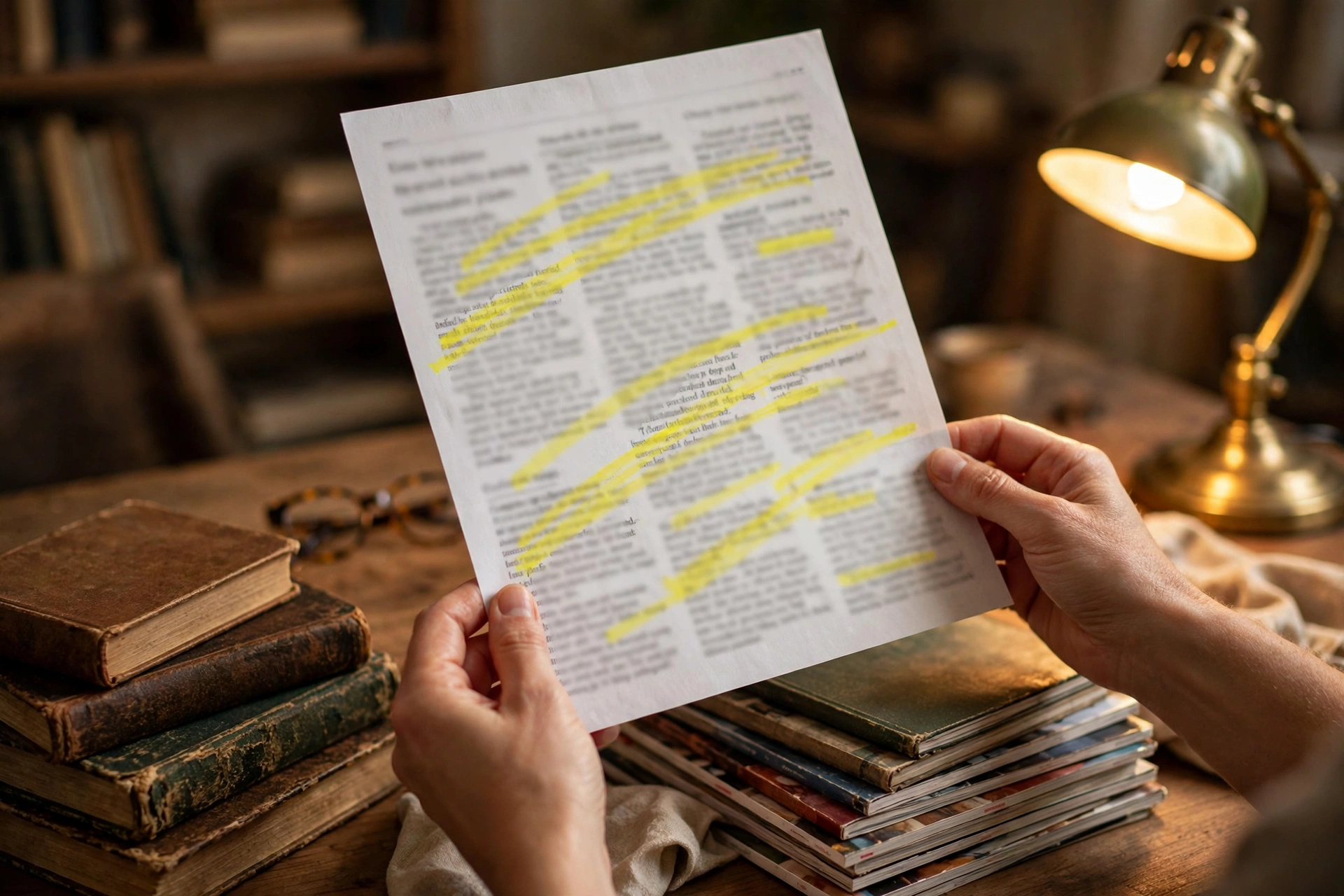
A folder full of saved links teaches you nothing. A swipe file with notes teaches you everything. For each piece you save, write three lines: what grabbed you, where it grabbed you (the line number or the moment), and what you would steal for your own work. After twenty entries, patterns appear. You will see that you are drawn to the same three or four structures, and suddenly you have a personal playbook instead of a pile of bookmarks.
Read like a writer, not like a reader
Readers read for the experience. Writers read for the machinery. Once you start writing seriously, your reading changes, and that change is free education.
When a headline makes you click, stop and study it before you read on. What promise did it make? What curiosity did it open? When an article keeps you to the end, notice where you almost left and what pulled you back. When a sales email makes you reach for your card, screenshot it and take it apart later. You are not enjoying the magic trick anymore. You are watching the magician’s hands, and that is exactly the point.
I read less for pleasure than I used to, and I learn more from every page. A few books a month, plus whatever the swipe file collects. Fiction teaches rhythm and voice. Nonfiction teaches structure and argument. Marketing writing teaches you what actually moves people to act. A writer who only reads one kind of thing writes in only one register, and registers are tools. Collect all of them.
Specificity is the whole game
Compare these two sentences. “Our restaurant has great food.” Versus: “The pancakes come off the griddle at 8 in the morning, and the terrace fills up by 8:15.” One is noise. The other makes you hungry. Specific, concrete detail is what separates writing that gets read from writing that gets scrolled past.
Vague writing is a trust problem disguised as a style problem. When you write “great food,” the reader learns nothing and believes less. When you write the griddle time and the terrace filling up, the reader pictures it, and pictured things feel true. Specificity is doing the reader’s imagination work for them, and readers reward whoever does their work for them.
This applies everywhere, not just food writing. Do not write “we improved engagement.” Write what changed, for whom, and what it looked like. Do not write “a leading brand.” Name the mechanism. The abstract version asks for trust. The specific version earns it.
The specificity workout
Take any paragraph you wrote this week and circle every adjective and every abstract noun. For each one, ask: can I replace this with something the reader could photograph? “Beautiful sunset” becomes “the sun dropping behind the palms, turning the pool pink.” “Great service” becomes “the reply came in eleven minutes, with the answer and the next step.” Do this fifty times and vagueness starts to feel physically uncomfortable, which is exactly the instinct you want.
Editing is where writing happens
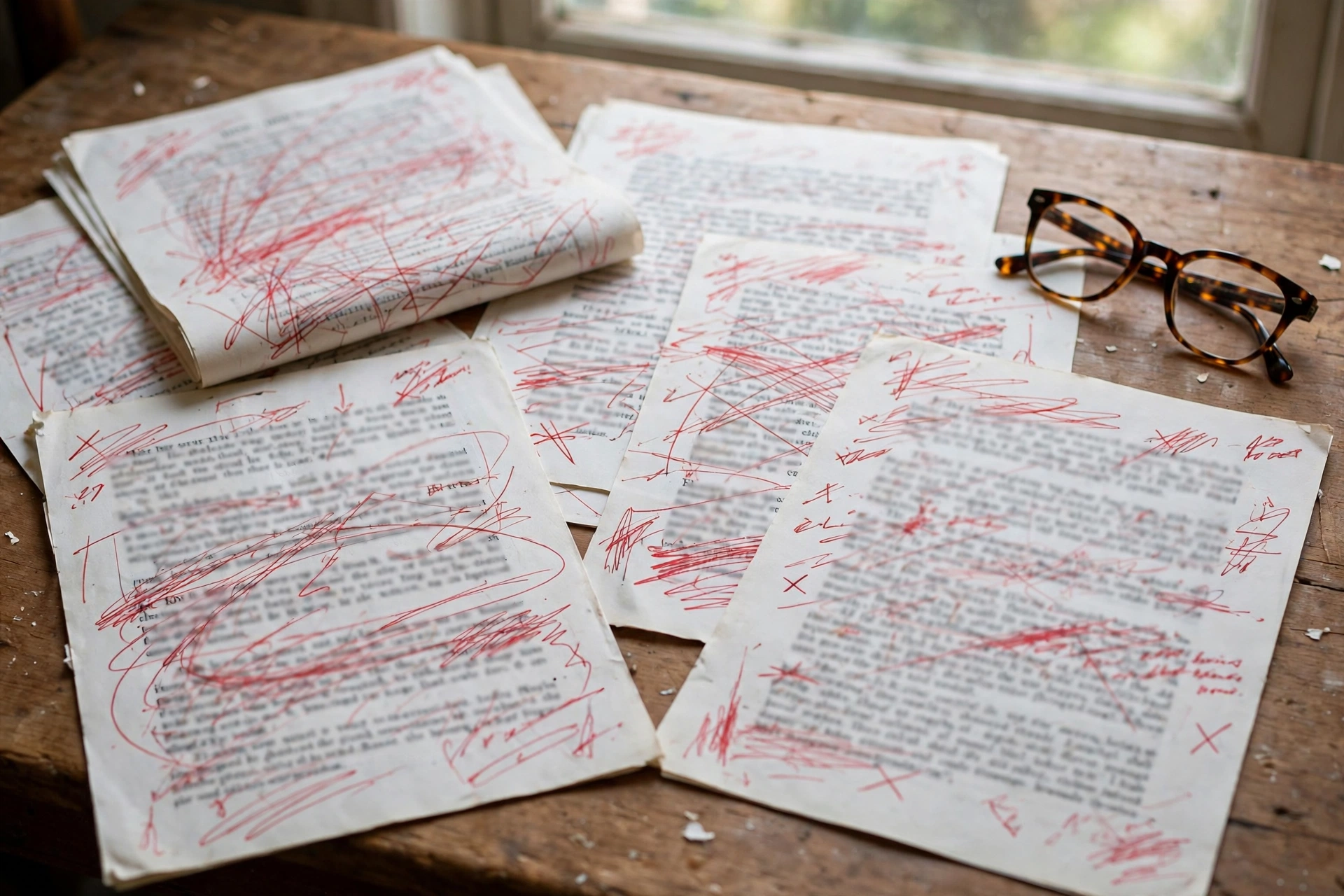
First drafts are thinking. Editing is writing. I spend more time editing than drafting, and the ratio keeps growing as I get better, because I have learned that clarity is not found. It is built, one cut at a time.
My editing passes go in order. First pass: structure. Does the argument hold? Is anything missing, repeated, or in the wrong place? Move the big blocks before touching a single sentence. Second pass: clarity. Every paragraph should make one point, and every sentence should earn its place. If a sentence does not advance the point, it goes, no matter how much I like it. Third pass: rhythm. Read it aloud. Where you stumble, the reader stumbles. Fix the stumble.
Kill your darlings, keep your readers
Every writer has sentences they love that the piece does not need. I mark them, admire them briefly, and cut them. A file of orphaned sentences lives on my computer, and almost none of them ever get used, because they were never as good as they felt in the moment. The piece is the boss. Your favorite line is an employee.
The test is simple: cover the sentence with your thumb. Does the paragraph still work? If yes, the sentence was decoration. Decorations get cut.
Writer versus author: pick your game
People use these words interchangeably, and they describe different games with different rules.
| Writer | Author | |
|---|---|---|
| Sells | Words and outcomes for clients | Books and ideas to readers |
| Gets paid by | Clients, per project or retainer | Readers, per copy, slowly |
| Key skill | Reliability and range | Depth and originality |
| Timeline to income | Weeks | Years |
| Best first move | Write daily for paying clients | Write the book while freelancing |
Most people asking “how do I become a writer” actually want the author’s life with the writer’s income timeline, and that confusion wastes years. Be honest about which game you are playing. The writer’s path pays sooner and teaches faster. The author’s path is a long bet you fund with the writer’s income.
Your first 90 days
- Days 1 to 7: Define your reader in one sentence and set a daily 45-minute writing slot. Write about what you know.
- Weeks 2 to 4: Publish weekly somewhere real. Start the swipe file with notes on everything that holds your attention.
- Month 2: Add the specificity workout to every piece. Start reading two books a month across fiction, nonfiction, and marketing.
- Month 3: Develop the three-pass editing ritual. Review your swipe file for patterns and write your personal playbook.
- Day 90: Look at piece one versus piece twelve. The difference is your proof that the system works.
Frequently asked questions
How long does it take to become a good writer?
Faster than you think, slower than you want. With daily practice and real feedback, most people see a dramatic difference in 90 days and a professional-level difference in a year. The variable is not talent. It is repetitions with feedback. A year of shipped weekly pieces beats five years of thinking about writing.
Do I need a degree or course to become a writer?
No, clients buy outcomes, not credentials. A portfolio of real published work outperforms any certificate. Courses can accelerate the learning, but they are optional, and the wrong course teaches you to write for the teacher instead of the reader. Write for real readers from day one.
How do writers actually make money?
Most working writers earn from clients: captions, campaigns, scripts, emails, articles, websites. A smaller number earn from their own audience through books, courses, or newsletters. The reliable path is client work first, audience second. My guide on going from freelancer to agency lead covers the business side in detail.
Can AI help with writing, or will it replace writers?
AI is a sparring partner, not a replacement, for writers who serve real readers. It drafts fast, which makes your editing skill more valuable, not less. The writers at risk are the ones selling generic output with no judgment attached. Judgment, taste, and accountability cannot be generated. My prompt engineering playbook shows how to use AI well without letting it flatten your voice.
What should I write about when starting out?
What you know from doing. Your job, your hobby, your city, your mistakes. Specific lived experience beats researched generality every time, because nobody else has your exact angle on it. “Things I learned managing Instagram accounts for restaurants” will outperform “10 social media tips” forever, because only you can write the first one.
How do I know if my writing is good enough?
Readers tell you, if you publish where they can respond. Comments, shares, replies, clients who come back: these are the metrics that matter. Not likes from other writers, not course grades. Put the work in front of the actual reader it was written for and watch what happens. Then iterate.
Writing is a practice, not a gift. Set the schedule, serve the reader, steal the structures, cut the darlings. Do it daily and the compound interest will shock you. And if you need words that work for your brand right now, talk to me.