

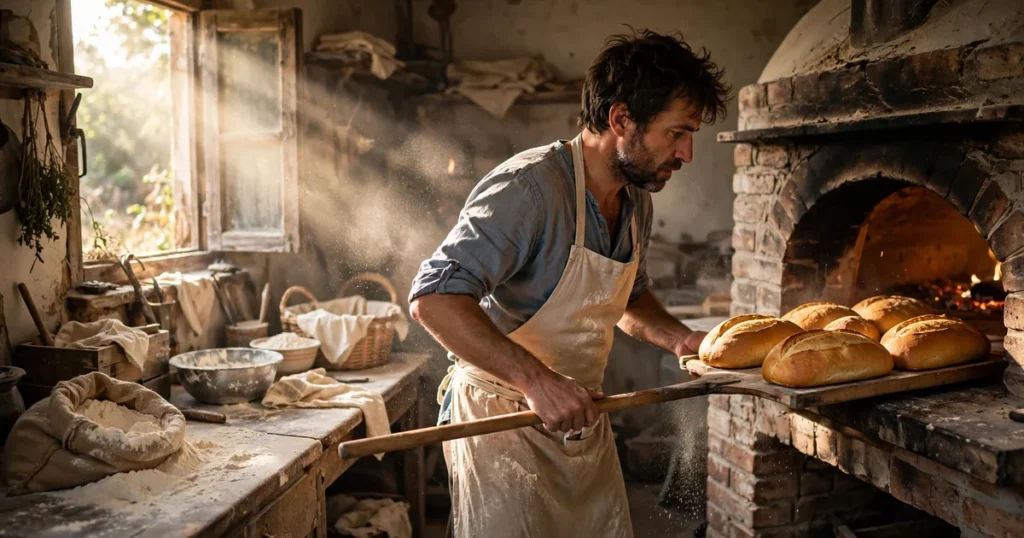
Every semester, I ask my marketing students the same question: name a brand you love. Not a brand you buy. A brand you love. The answers come fast. A sneaker company. A coffee roaster. A skincare line. Then I ask the harder question: what is the story behind it? The room goes quiet. They cannot always tell the story, but they feel it. That feeling is the story doing its work.
Small businesses hear "brand storytelling" and assume it belongs to someone else. To the companies with documentary crews and origin myths. But storytelling is not a budget. It is a way of talking about your business that human brains are already wired to receive. You do not need a film crew. You need to know which stories you already own and how to tell them on purpose. In this guide, I will show you what brand storytelling actually is, give you a simple framework that fits any small business, and walk through five worked examples so you can see the method in action.
What Brand Storytelling Actually Is (and What It Is Not)
Brand storytelling is the practice of communicating what your business does through specific, human narratives instead of abstract claims. Not "we are passionate about quality." A story about the Tuesday morning your oven broke two hours before a wedding cake was due, and what you did next. The first is a claim anyone can make. The second is a memory only you own.
It is not your "About" page, though your About page should contain stories. It is not a fairy tale with a hero's journey mapped onto your quarterly revenue. And it is not fiction. This matters more than people think. A brand story is a true thing, told well. The moment a customer senses invention, the story stops building trust and starts spending it.
Here is the relationship most businesses get backwards: storytelling does not replace positioning. It expresses it. Your positioning decides the one idea your brand owns; your stories are how that idea travels. If you have not written your positioning down yet, do that first, then come back. A story without a position underneath it is entertainment. A story with one is marketing.
Why Stories Work: The Psychology in Plain English
You have probably heard the claim, often attributed to the psychologist Jerome Bruner, that stories are twenty-two times more memorable than facts. The exact number is debated, but the direction is not controversial: information wrapped in narrative sticks in a way that bullet points do not. When you hear a story, your brain does something it does not do for a list of features. It simulates. You picture the broken oven. You feel the clock ticking. That simulation is what makes the memory durable.
There is a second mechanism, and it matters more for small businesses. Stories carry proof inside them. If I tell you my customer service is excellent, you have to take my word for it. If I tell you about the customer whose package was lost on a Friday and the lengths we went to before Monday, you conclude the service is excellent on your own. Conclusions customers reach themselves are stickier than claims handed to them. That is the whole game of brand storytelling: stop asserting, start demonstrating, and let the customer do the concluding.
The Simple Story Framework That Fits Any Small Business
Most storytelling frameworks were built for novels and films, which is why small business owners bounce off them. You do not need twelve stages. You need five beats that fit on an index card:
1. The person. A specific human, not a demographic. Your customer, your founder, your employee. Name the kind of person precisely enough that the reader can picture them.
2. The want. What this person wanted, in plain language. Not "a holistic solution." A thing. A cake on time. A plumber who shows up.
3. The obstacle. What stood in the way. This is the beat most business stories skip, and it is the most important one. No obstacle, no story. Just an advertisement wearing a costume.
4. The turn. What you did that was specific, human, and slightly above what was required. The turn is where your values show up as actions instead of adjectives.
5. The proof. What changed, in concrete terms. Not "they were delighted." The wedding happened. The pipes held. The customer came back with her sister.
Five beats. Every story your business will ever need fits this shape: the About page, the Instagram caption, the sixty-second video, the email to your list. When a story feels flat, one of these beats is almost always missing, usually the obstacle or the proof.

Example 1: The Neighborhood Bakery (Origin Story)
The examples in this section are illustrative, invented to teach the method, not stories of any client I have worked with. First, an origin story for a neighborhood bakery.
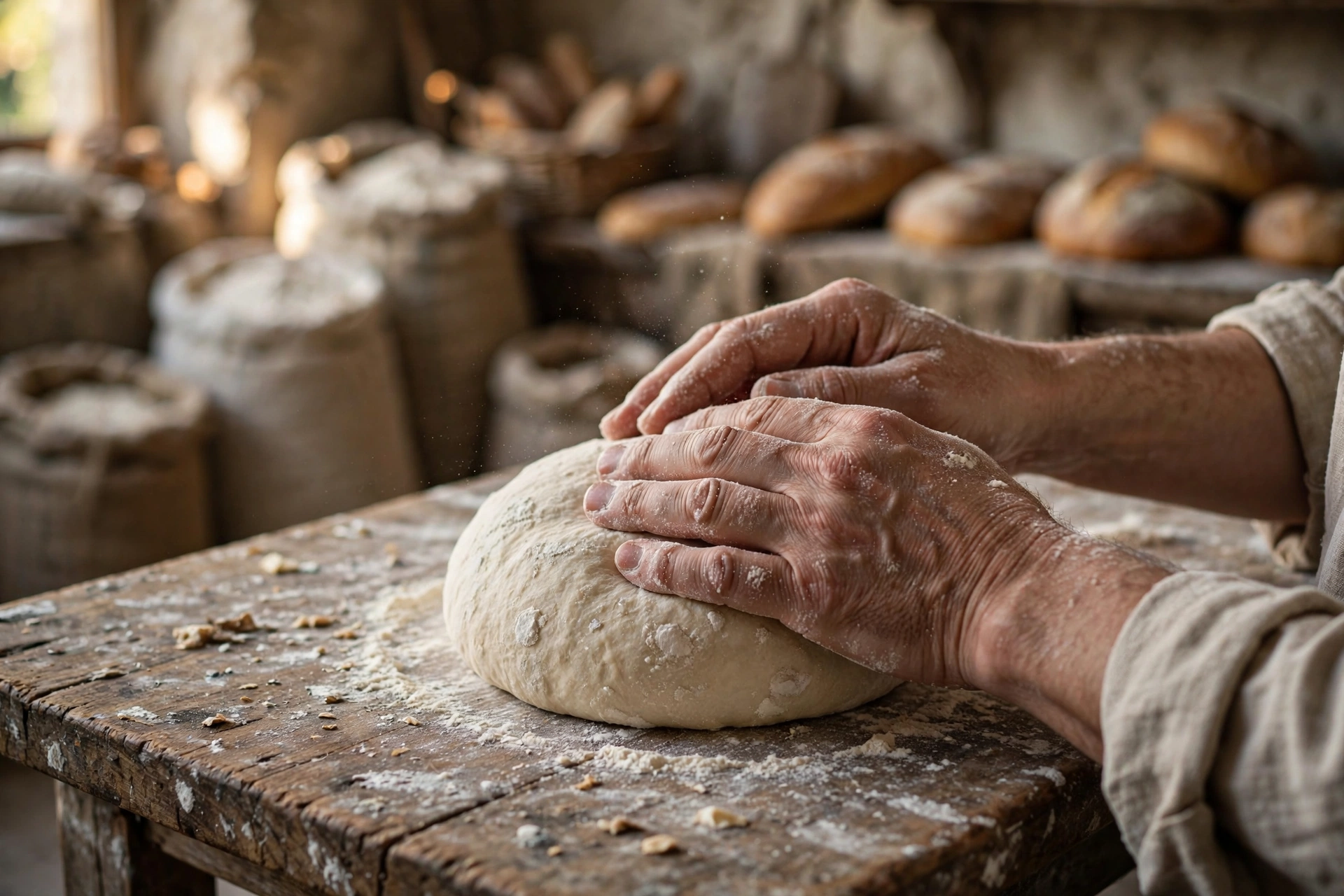
The flat version:
Sunrise Bakery has been serving the neighborhood since 2019. We are passionate about baking and committed to quality. Our sourdough is made with organic flour and baked fresh every morning.
Why it fails: every sentence is a claim any bakery could make. "Passionate" and "committed to quality" are adjectives, not evidence. There is no person, no obstacle, no turn. A reader finishes it knowing nothing they did not know before reading it.
The story version:
In 2019, Maria rented the corner space on Elm Street because the rent was cheap and the oven was already there. It was a terrible oven. For three months, every batch of sourdough came out with one side darker than the other, and Maria sold the pale side facing out, hoping nobody would notice. Then a regular named Dorothy noticed, and instead of complaining, she said, "The dark side tastes better anyway." Maria started baking every loaf darker after that. Six years later, the "Dorothy loaf" is still the first thing to sell out every morning, and Maria still will not tell you which side she puts facing out.
Why it works: there is a person (Maria, then Dorothy), a want (make the bakery work), an obstacle (a terrible oven), a turn (a customer's kindness becomes a signature product), and proof (sells out every morning, six years running). Notice what the story proves without asserting: resourcefulness, humility, community roots. No adjective required.
Example 2: The Plumbing Company (Customer Story)
The flat version:
Apex Plumbing provides fast, reliable service with upfront pricing. Our licensed technicians arrive on time and treat your home with respect. Call today for a free estimate.
Why it fails: this is a list of table stakes dressed as differentiators. Every plumber promises to arrive on time. Nobody believes it until they see it happen, preferably to someone else first.
The story version:
Last February, during the cold snap, the Hendersons' pipes burst at 11 p.m. on a Saturday. Water was coming through the kitchen ceiling. They called three companies. Two went to voicemail. The third, Apex, answered, and the technician talked Mr. Henderson through shutting off the main valve over the phone before driving over in the snow. The repair took two visits. The phone call took four minutes and cost nothing. The Hendersons have called Apex for everything since, and they have sent four neighbors.
Why it works: the obstacle is vivid and specific (burst pipes, 11 p.m., a cold snap). The turn is the four-minute phone call, help given before any money changed hands. The proof is countable: four neighbors sent over. A reader does not conclude "Apex has good marketing." They conclude "Apex answers the phone." That conclusion, reached alone, is worth more than any slogan.
Example 3: The Boutique Fitness Studio (Founder Story)
The flat version:
I founded Ironworks Studio because I believe fitness should be for everyone. Our certified coaches create personalized programs in a supportive, judgment-free environment.
Why it fails: "for everyone" is for no one, and "judgment-free environment" is what every studio claims, including the ones with mirrors on every wall. The founder is a believer with no biography. Belief without biography is just branding.
The story version:
I opened Ironworks at thirty-four, after spending six years as the person who bought a gym membership every January and stopped going by March. I knew every reason people quit, because I had used all of them: too crowded, too confusing, too embarrassing. So I built the studio I needed back then. Twelve people max per class. Every movement taught like you have never done it before, because most of our members have not. Nobody gets weighed in. The first class is always free, because I remember exactly how it felt to walk into a gym believing I did not belong there.
Why it works: the founder's past failure is the credential. The obstacle is not a dramatic event; it is six Januarys of quitting, which the target customer has lived too. Every operational choice (twelve people, no weigh-ins, free first class) is explained by the story, so it builds trust and justifies the business model at once.
Example 4: The Handmade Soap Shop (Craft Story)
The flat version:
Our soaps are handcrafted in small batches using natural ingredients and traditional cold-process methods. Each bar is cured for six weeks for a harder, longer-lasting bar.
Why it fails: this is not terrible, but it is a spec sheet. "Handcrafted," "small batches," "natural ingredients" are category language. A customer reading ten soap shops will read ten versions of this paragraph. Nothing here could only be true of this maker.
The story version:
Every bar we sell was poured on a Tuesday. That is not branding; it is logistics. Our maker, June, pours on Tuesdays because the studio is quietest then, and soap poured in a calm room sets better, or so she insists after eleven years. Each batch rests for six weeks on pine racks her grandfather built, and she still stamps every bar by hand, which means no two stamps land exactly alike. If your bar's stamp is crooked, that was a Tuesday afternoon, and June was probably listening to baseball.
Why it works: specificity is doing all the heavy lifting. Tuesdays. Pine racks. A grandfather. Baseball. None of these details are strictly necessary, and that is exactly why they are persuasive: invented stories are vague, and true stories have Tuesdays in them. The crooked stamp, which could be a flaw, becomes the signature. That is the craft story's special power: turning handmade imperfections into the proof of handmade.
Example 5: The Accounting Firm (Transformation Story)
The flat version:
We help small businesses take control of their finances with proactive tax planning and year-round support. Our clients save money and sleep better at night.
Why it fails: "take control," "proactive," "sleep better" are the accounting industry's greatest hits. Every firm promises them. The transformation described is a feeling, not a change you can picture.
The story version:
When Daniel brought us his books, they lived in a shoebox. Literally. Receipts, unopened bank letters, three years of "I will deal with this later." His first tax season with us, we found deductions he had missed for two years running, including the home office he was afraid to claim because a friend told him it triggers audits. (It does not, filed correctly.) This year, Daniel checks a dashboard on his phone every Friday. It takes him four minutes. The shoebox is in his closet, empty, and he keeps it there on purpose. He says it reminds him what the business used to feel like.
Why it works: the shoebox is a concrete image the reader will remember long after "proactive tax planning" fades. The obstacle is emotional (fear, avoidance), which is honest about why people hire accountants. The turn includes a small piece of expertise (the home office deduction), which demonstrates competence inside the story. The proof is a ritual: four minutes every Friday. And the empty shoebox kept on purpose is the kind of detail no copywriter invents.
Finding Your Stories and Putting Them to Work
You already own more stories than you think. You are just not in the habit of catching them. Here is how to start.
The mining questions
Once a week, sit down for twenty minutes and answer one of these in writing. Do not polish. Just answer.
When did something go wrong this week, and what did we do? Problems are story mines. The broken oven, the burst pipe, the shipment that went to the wrong city. Customers trust businesses that have survived things.
What did a customer say that surprised us? Dorothy and the dark side of the loaf. The throwaway comment that reveals what people actually value.
What do we do that competitors would find inefficient? June pouring only on Tuesdays. The thing you do the slow way is usually the thing worth telling.
What did we believe when we started that turned out to be wrong? Wrong beliefs, corrected, are the raw material of founder stories. They show growth, which is more trustworthy than perfection.
What is the smallest thing a customer thanked us for? Small thanks reveal the real product. It is rarely the thing on the price list.
If staring at a blank page freezes you, borrow an interviewer. I sometimes use AI as a story-mining partner: I give it the five questions above and tell it to interview me one question at a time, pushing for specifics whenever I answer in generalities. It is annoyingly good at refusing to accept "we just care about quality." If you want to get sharper at that kind of directed back-and-forth, my prompt engineering guide covers the technique.
Where each story goes
A story you tell once is an anecdote. A story you place everywhere is an asset. Map each finished story to its homes:

Your website: the About page gets the origin story. Service pages get customer stories, one per service, placed where the visitor is deciding. This is where stories do their heaviest selling, because the reader arrived with intent.
Social media: one story becomes a week's worth of posts: the hook as a short video, the obstacle as a carousel, the proof as a customer quote, the behind-the-scenes as Stories. This is the part most businesses skip. They write the story once and move on, instead of repeating one good idea across every channel until it sticks.
Email: your list is the warmest audience you have, and stories are what keep it warm. A monthly "one story from the shop" email will outperform a monthly "10% off" email for every business I have ever watched try both. Discounts train customers to wait. Stories train them to care.
Video: if you make one video a month, make it a story, not an announcement. Sixty seconds, one obstacle, one turn. Production value matters less than specificity, and what the viewer sees carries the story as much as the words: film where the work actually happens, not in front of a blank wall.
Five Mistakes That Ruin Brand Stories
1. Making yourself the hero. In your brand's stories, the customer is the hero and you are the guide. The bakery story works because Dorothy's comment changes the bread. If every story ends with how great you are, readers feel sold to, not spoken to.
2. Skipping the obstacle. "We opened in 2019 and things went well" is not a story. It is a timeline. The obstacle is what makes the reader lean in. Businesses hide their obstacles because they think struggle looks unprofessional. It looks human.
3. Telling it once. A story told once is content. A story told across your site, your socials, your emails, and your videos is a brand asset. Most small businesses are sitting on three great stories they told one time in 2022.
4. Polishing out the specifics. The first edit most people make to a true story is removing the weird details: the Tuesday, the shoebox, the baseball. Those details are the credibility. A story with no specifics reads as invented even when it is true.
5. Confusing story with history. "Founded in 2019, we grew to three locations" is history. Story is what happened inside the history: the night the oven broke, the customer who changed the recipe. History informs. Story persuades.
Frequently Asked Questions
What is brand storytelling for a small business?
Brand storytelling is communicating what your business does through specific, true narratives (origin stories, customer stories, founder stories, craft stories) instead of abstract claims like "quality" and "passion." For a small business it is the cheapest trust-building tool available: you already own the stories.
Do I need to be a good writer to do brand storytelling?
No. You need to be specific. The stories that work are not beautifully written; they are precisely remembered. Tuesdays, shoeboxes, four-minute phone calls. If you can tell a friend what happened at work today, you can do brand storytelling. The framework in this guide does the structural work for you.
What is the difference between brand storytelling and content marketing?
Content marketing is the distribution system: the posts, emails, and videos. Brand storytelling is the material running through it. You can do content marketing without storytelling (tips, announcements, promotions), but it is forgettable. Storytelling is what makes the content marketing worth remembering.
How long should a brand story be?
As long as the five beats need. A social caption can carry a story in eighty words. An About page might take four hundred. The test is not length; it is whether removing any sentence would lose a beat. If the obstacle and the turn survive, the length is right.
Can I use customer stories without their permission?
Get permission, always, and get it in writing for anything beyond a first name. Most customers are flattered to be asked, especially when you show them the draft first. If a customer declines, change the identifying details or save it and tell a different one. Trust is the asset here; do not spend it to save time.
Where should brand storytelling appear first if I am starting from zero?
Your About page. It is the page people visit when they are deciding whether to trust you, and it is where stories convert best. Write the origin story this week. Next, add one customer story to your most important service page. Then start the monthly story email. That sequence, in that order, is the highest return for the least effort.
Your Turn: Tell One Story This Week
You do not need five stories. You need one, told well and placed everywhere. This week, answer one mining question in writing. Find the five beats in your answer. Put the story on your About page, then cut it into three social posts and one email. That is the whole system.
And if you want help finding the stories hiding in your business, that is work I genuinely enjoy: sitting with a founder for an hour and leaving with three stories they did not know they had. Get in touch through my contact page and tell me what you are building. We will find the stories it deserves.